Kitchen Sinks: Types, Materials, Sizes & Buying Guide - Blog
A kitchen sink is one of the most frequently used fixtures in any kitchen. From washing vegetables and cleaning utensils to preparing food, it plays an important role in everyday kitchen activities. Choosing the right sink can improve convenience, maintain hygiene, and complement the overall kitchen design.
With different kitchen sink materials, styles, sizes, and installation options available, selecting the right one requires careful consideration. Whether you are designing a new kitchen or renovating an existing space, understanding the types of kitchen sinks can help you make a practical choice.
This kitchen sink buying guide covers popular sink types, materials, standard sizes, and important factors to consider before purchasing.
What Are the Different Types of Kitchen Sinks?
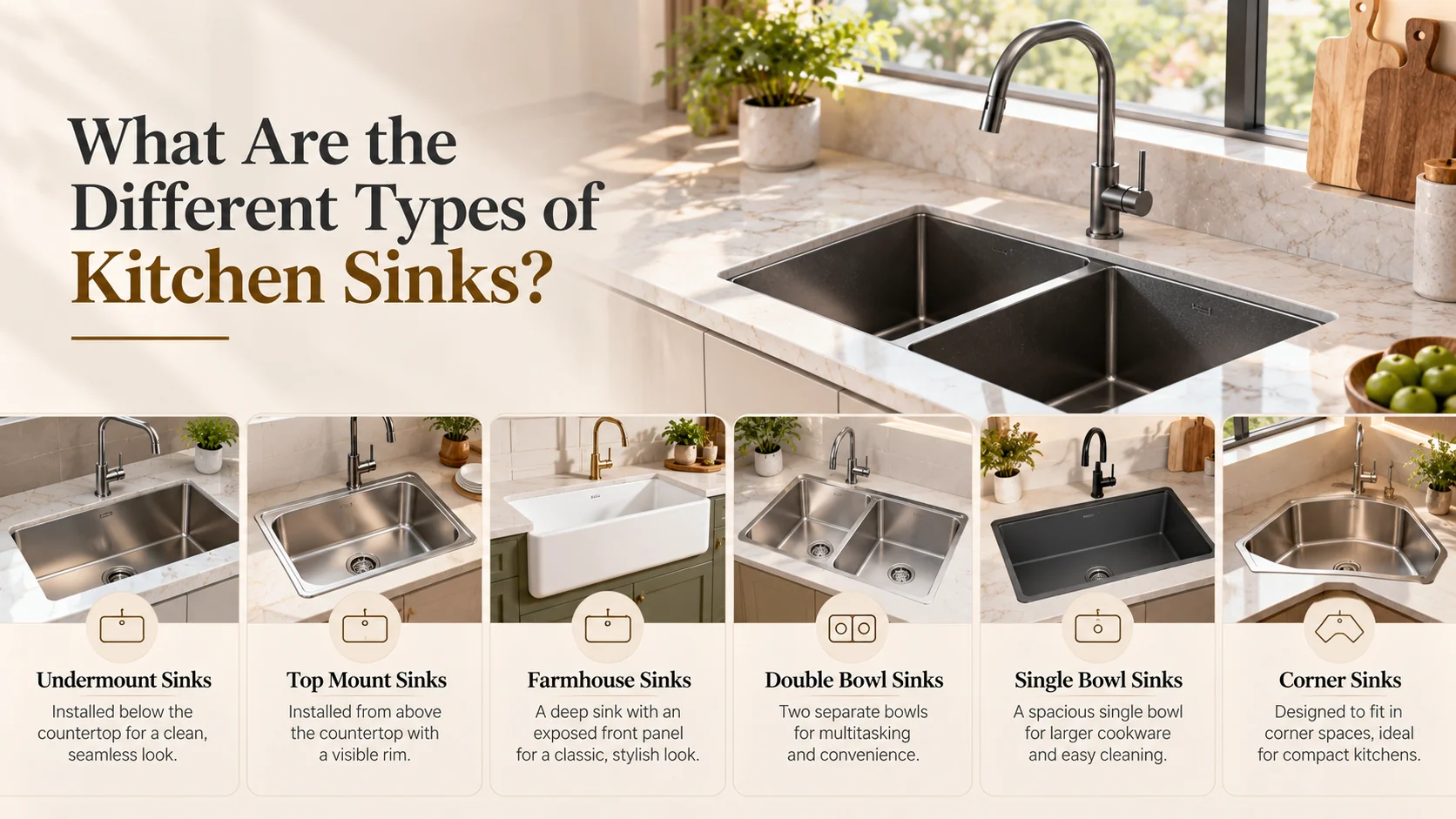
Kitchen sinks are available in several designs to suit different kitchen layouts, usage requirements, and interior styles. The right option depends on your available countertop space, cleaning habits, and preferred appearance.
1. Single Bowl Kitchen Sink
A single bowl kitchen sink features one large basin without a divider. It provides enough space for washing large pots, pans, baking trays, and other kitchen utensils.
This design works well in compact kitchens and households that prefer a simple, spacious washing area. It is also easier to clean because there are fewer corners and dividers.
Best for: Small kitchens, compact countertops, and washing large cookware.
2. Double Bowl Kitchen Sink
A double bowl kitchen sink has two separate basins that allow users to perform different tasks simultaneously. For example, one bowl can be used for washing vegetables while the other is used for cleaning utensils.
Some models feature two equally sized bowls, while others combine a large basin with a smaller one. Before purchasing, consider the available countertop space and the size of your regular cookware.
Best for: Busy kitchens, larger households, and multitasking during food preparation.
3. Undermount Kitchen Sink
An undermount kitchen sink is installed beneath the countertop, creating a clean and seamless appearance. Since the sink edges remain hidden, food crumbs and water can be wiped directly into the basin.
This installation style is commonly paired with suitable stone or solid-surface countertops. Proper installation and sealing are important to prevent water from entering the cabinet area.
Best for: Modern kitchens, premium countertops, and minimalist interiors.
4. Top Mount Kitchen Sink
A top mount kitchen sink, also known as a drop-in sink, is installed through a countertop opening, with its rim resting on the surface.
It is a popular option because installation and replacement are generally straightforward. The raised rim, however, may require additional cleaning to prevent dirt and moisture from accumulating around the edges.
Best for: Practical kitchen renovations, conventional layouts, and easier replacement.
5. Farmhouse Kitchen Sink
A farmhouse kitchen sink typically features a deep basin and an exposed front panel, also called an apron front. Its design combines traditional styling with functionality.
The deep bowl accommodates large pots and pans, although the sink may require a specially designed cabinet and suitable countertop modifications.
Best for: Spacious kitchens, traditional interiors, and statement kitchen designs.
6. Wall Mounted Kitchen Sink
A wall mounted kitchen sink is attached directly to a wall rather than supported by a conventional countertop. This configuration can leave the floor area beneath the sink open and create a simple appearance.
It is more commonly used in utility areas, compact service kitchens, and specific kitchen layouts. Proper wall support and plumbing arrangements are essential.
Best for: Utility kitchens, limited-space applications, and selected functional layouts.
Popular Kitchen Sink Materials
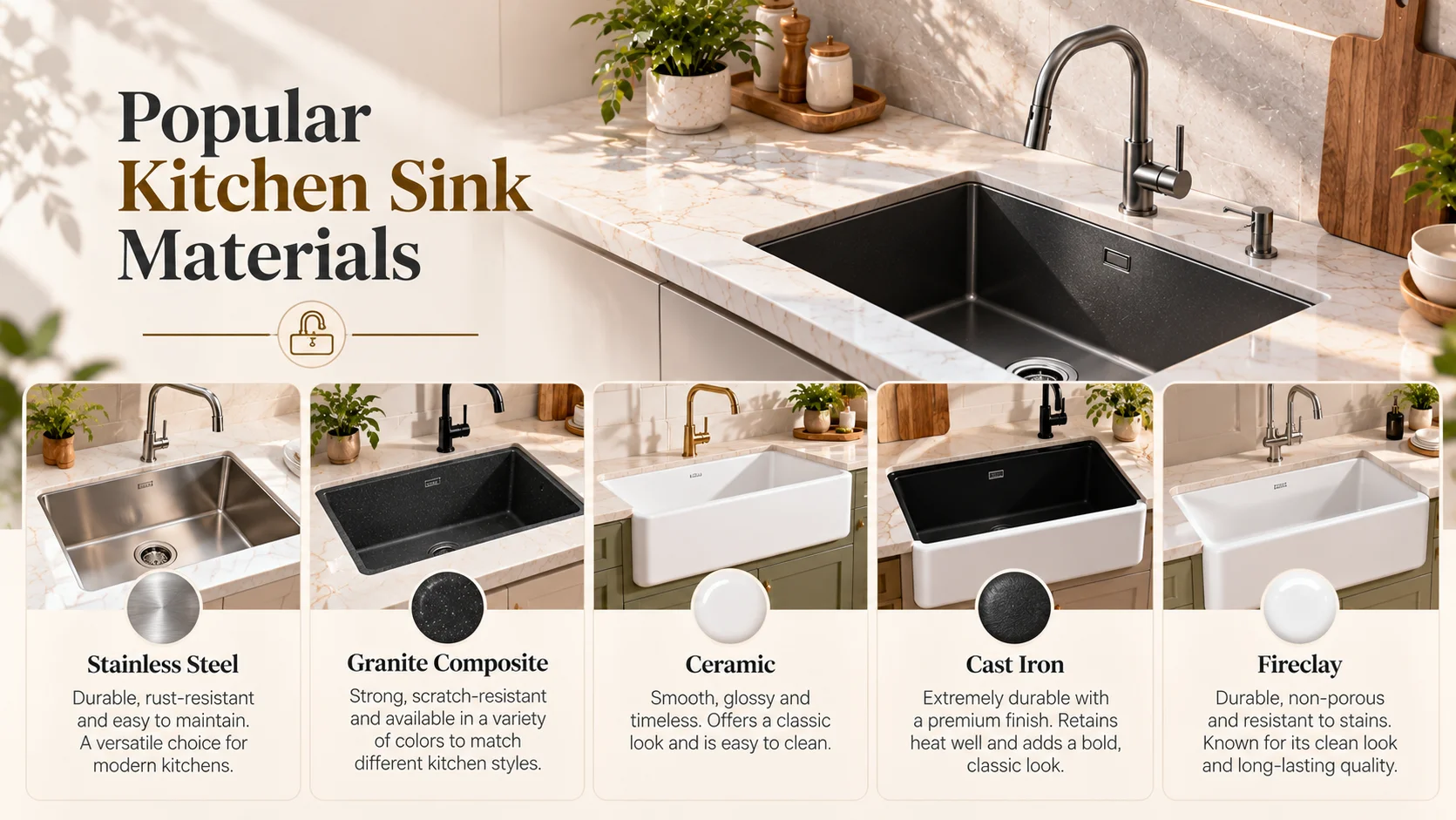
Kitchen sink materials influence durability, maintenance, appearance, and price. Understanding their differences helps you choose a sink that suits your daily requirements.
1. Stainless Steel Kitchen Sink
A stainless steel kitchen sink is a widely used option because it is lightweight, versatile, and generally easy to maintain. It suits different kitchen styles and is available in multiple sizes, bowl configurations, and finishes.
Quality, steel grade, and thickness can affect performance. Stainless steel may develop water spots, scratches, or dents depending on the product and how it is used.
Advantages:
- Generally easy to clean and maintain.
- Resistant to rust when made from suitable stainless steel and maintained properly.
- Available in many sizes and installation styles.
- Often offers a practical balance between cost and performance.
2. Granite Kitchen Sink
A granite kitchen sink is commonly made from composite materials containing granite or other mineral particles mixed with resin. It is valued for its textured appearance and availability in different colours.
These sinks can offer good resistance to everyday wear, but their performance depends on the material composition and manufacturer. Dark finishes may also show mineral deposits if water is not wiped away regularly.
Advantages:
- Available in contemporary colours and finishes.
- Offers a solid, substantial appearance.
- Can provide good resistance to scratches and everyday wear.
- Complements modern kitchen countertops.
3. Ceramic Kitchen Sink
A ceramic kitchen sink typically features a glazed surface that creates a smooth, clean appearance. Its finish works well in both traditional and contemporary kitchens.
Ceramic surfaces are generally easy to wipe clean, but strong impacts from heavy cookware can cause chips or cracks. Buyers should also check the sink's dimensions and weight before installation.
Advantages:
- Smooth and easy-to-clean surface.
- Attractive glossy finish.
- Suitable for classic and modern kitchen designs.
- Available in different shapes and configurations.
Kitchen Sink Material Comparison
| Material | Main Benefits | Points to Consider |
|---|---|---|
| Stainless steel | Versatile, lightweight, easy to maintain | Can show scratches and water spots |
| Granite composite | Stylish, available in multiple colours | Quality and maintenance vary by product |
| Ceramic | Smooth, attractive finish | Can chip or crack from heavy impacts |
The best kitchen sink material depends on your budget, cooking habits, maintenance preferences, and kitchen design. Compare product specifications rather than choosing based on appearance alone.
What Are the Standard Kitchen Sink Sizes?
Kitchen sink sizes vary according to the number of bowls, basin depth, cabinet dimensions, and installation type. Measuring your available space before shopping helps prevent fitting problems.
The following measurements are general reference ranges, not universal standards.
| Sink Type | Approximate Width | Approximate Depth |
|---|---|---|
| Compact single bowl | 15–22 inches | 6–9 inches |
| Standard single bowl | 22–30 inches | 7–10 inches |
| Double bowl | 30–36 inches | 7–10 inches |
| Large kitchen sink | 33–36 inches or more | 8–10 inches |
Actual kitchen sink dimensions vary by manufacturer and model. Always check the product's overall dimensions, bowl dimensions, cutout measurements, and minimum cabinet requirements.
How to Choose the Right Kitchen Sink Size
Consider these factors when selecting kitchen sink sizes:
- Available countertop space: Measure the length and depth of the area where the sink will be installed.
- Cabinet dimensions: Ensure the sink fits inside the base cabinet and leaves enough room for plumbing.
- Bowl capacity: Choose a basin that accommodates your largest regularly used utensils.
- Basin depth: A deeper sink can help contain splashes, but it may require more bending during use.
- Kitchen usage: A single bowl may be sufficient for occasional cooking, while a double bowl can help with multitasking.
For compact kitchens, a smaller single bowl can preserve valuable counter space. Larger kitchens may accommodate a double bowl or spacious single basin.
How to Choose the Best Kitchen Sink for Home
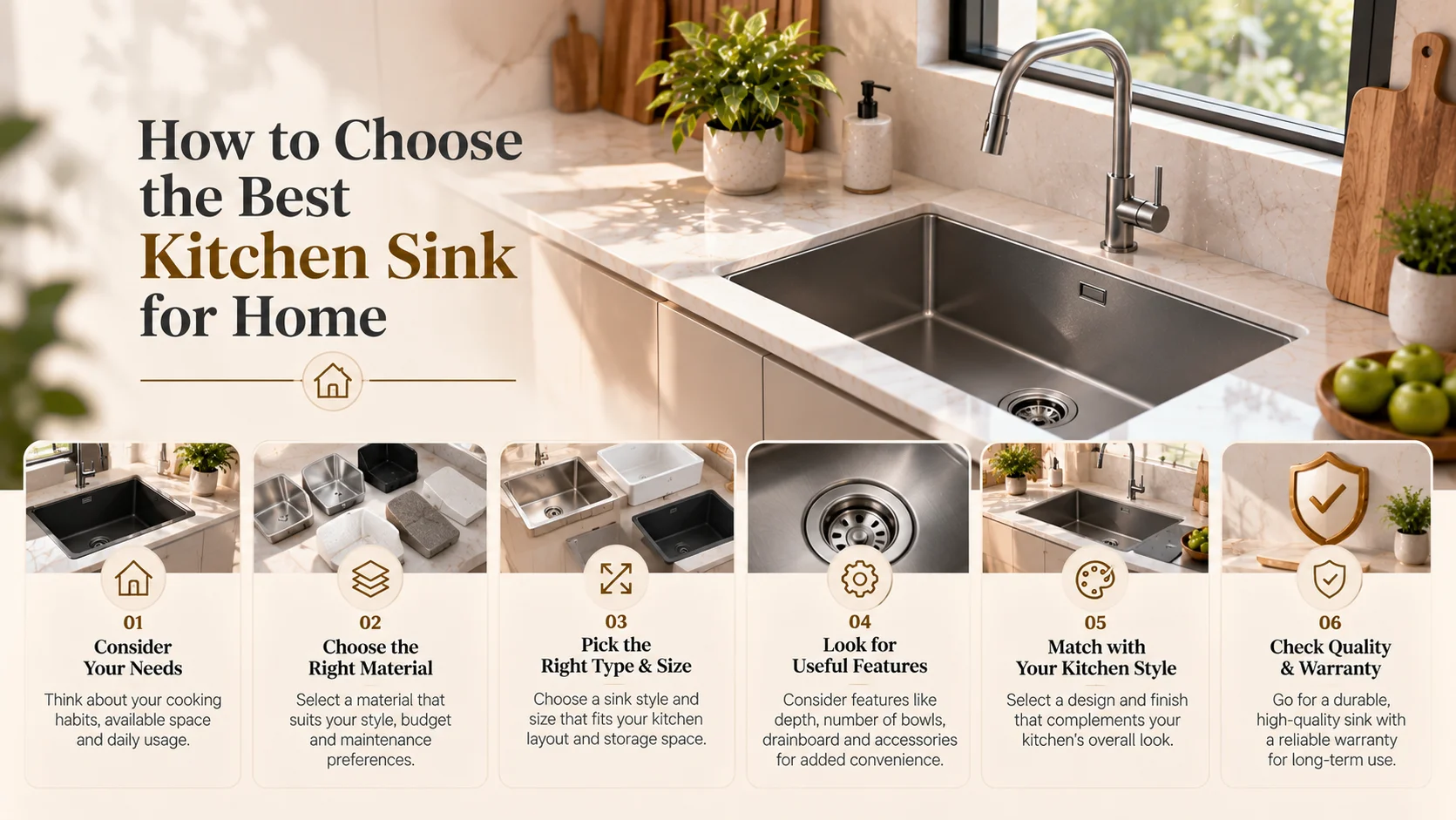
Finding the best kitchen sink for home use involves more than selecting an attractive design. Consider the following factors before making a purchase.
1. Match the Sink to Your Kitchen Layout
Your kitchen layout determines the space available for the sink and the way it connects with other work areas. Measure the countertop and cabinet before comparing products.
For smaller kitchens, compact sinks can preserve preparation space. Larger kitchens offer more flexibility for double bowls and wider basins.
2. Select a Suitable Material
Compare stainless steel, granite composite, and ceramic according to durability, maintenance, appearance, and budget. If your kitchen experiences heavy daily use, prioritise practical performance and ease of cleaning.
Check the manufacturer's care instructions to understand how to maintain the surface and avoid damage.
3. Choose the Right Installation Type
Top mount and undermount kitchen sinks serve different installation needs. A top mount model can be convenient for replacement, while an undermount sink provides a streamlined countertop appearance.
Confirm countertop compatibility and installation requirements before finalising your choice.
4. Consider Kitchen Sink Price
Kitchen sink price varies according to material, dimensions, bowl configuration, finish, brand, and included accessories. Specialised designs and larger models may cost more than basic options.
Compare the complete product specification rather than relying on price alone. Installation charges, plumbing changes, waste fittings, and accessories may add to the total cost.
5. Check Faucet and Drain Compatibility
Kitchen sink faucet compatibility is important for comfortable everyday use. Check the number and position of tap holes, faucet reach, and clearance above the basin.
Also inspect the kitchen sink drainage system, including the waste outlet, strainer, trap, and pipe connections. Compatible fittings can simplify installation and help prevent leaks.
6. Consider Maintenance and Durability
Choose durable kitchen sink materials that suit your cleaning routine. A smooth surface may be easier to wipe down, while certain finishes require more care to prevent visible marks.
Look for product details about scratch resistance, heat resistance, stain resistance, warranty coverage, and recommended cleaning methods.
Kitchen Sink Designs for Modern Interiors
Modern kitchen sinks combine practical features with finishes that complement the overall interior.
Popular kitchen sink designs include:
- Minimalist stainless steel sinks: Suitable for contemporary kitchens with clean lines and simple finishes.
- Granite composite sinks: Add texture and colour to modern countertops.
- Deep single bowl sinks: Provide room for larger utensils while maintaining a simple layout.
- Double bowl sinks: Offer flexibility for separate washing and rinsing tasks.
- Undermount sinks: Create a neat transition between the sink and countertop.
- Farmhouse sinks: Introduce a distinctive focal point in spacious kitchens.
When selecting a design, consider how it coordinates with your countertop, cabinets, faucet, and other kitchen fixtures. A practical sink that fits your daily routine will generally provide more lasting value than a design chosen for appearance alone.
Kitchen Sink Installation and Maintenance Tips
Correct kitchen sink installation helps ensure stable fitting, reliable drainage, and convenient everyday use.
Before installation, verify the countertop cutout, cabinet clearance, plumbing connections, and manufacturer's instructions. Undermount sinks may require additional support, while heavier models may need a reinforced cabinet structure.
For routine maintenance, follow these simple practices:
- Clean the basin regularly using a suitable, non-abrasive cleaner.
- Wipe away standing water to reduce visible mineral deposits.
- Avoid harsh cleaning products that can damage the finish.
- Use a sink strainer to help prevent food waste from entering the drain.
- Check seals, drainage fittings, and plumbing connections periodically.
- Follow the manufacturer's instructions for removing stains and maintaining the surface.
These habits can help preserve the sink's appearance and support long-term performance.
Conclusion
Choosing the right kitchen sinks requires careful consideration of material, size, installation style, budget, and everyday usage. Stainless steel offers versatility, granite composite provides a distinctive finish, and ceramic delivers a smooth, classic appearance. Ambika Creative Collection offers options for buyers exploring kitchen and interior products to complement different design preferences.
Before purchasing, measure your countertop and cabinet, compare standard kitchen sink sizes, and check faucet and drainage compatibility. Buyers should also evaluate product specifications and supplier reliability to find suitable options for their kitchen requirements.
Frequently Asked Questions (FAQs)
1. Which material is best for a kitchen sink?
Stainless steel is a versatile choice for many kitchens because it is generally easy to maintain and available in different designs. Granite composite and ceramic are also suitable options depending on your preferred appearance, budget, and care requirements.
2. What is the standard size of a kitchen sink?
A standard single bowl kitchen sink is often around 22–30 inches wide, while double bowl models commonly range from 30–36 inches. Exact dimensions vary by model, so check cabinet and cutout measurements before buying.
3. Which is better: a single bowl or double bowl kitchen sink?
A single bowl sink provides more uninterrupted space for washing large utensils. A double bowl sink allows you to separate tasks such as washing and rinsing. The better choice depends on your kitchen space and cooking habits.
4. Are granite kitchen sinks better than stainless steel sinks?
Granite composite sinks offer colour options and a substantial appearance, while stainless steel sinks are generally lighter and versatile. Compare durability, maintenance, installation requirements, and price before deciding.
5. What should I consider before buying a kitchen sink?
Consider sink dimensions, material, bowl configuration, installation type, cabinet space, faucet compatibility, drainage fittings, maintenance, and total cost.