Single-Sided vs Double-Sided Cement Jali: Key Differences - Blog
Choosing the right wall finish can change the appearance of an entire space. While paint and conventional wall tiles remain popular, decorative cement jali offers another way to add patterns and architectural character to walls.
However, not every jali design serves the same purpose. Single-sided and double-sided cement jali differ mainly in their intended appearance and suitability for different installations. Understanding these differences can help homeowners, architects, interior designers, and builders select a suitable option for their projects.
In this guide, we will explore the features, applications, and selection factors of both types to help you make an informed decision.
What Is Single-Sided Cement Jali?
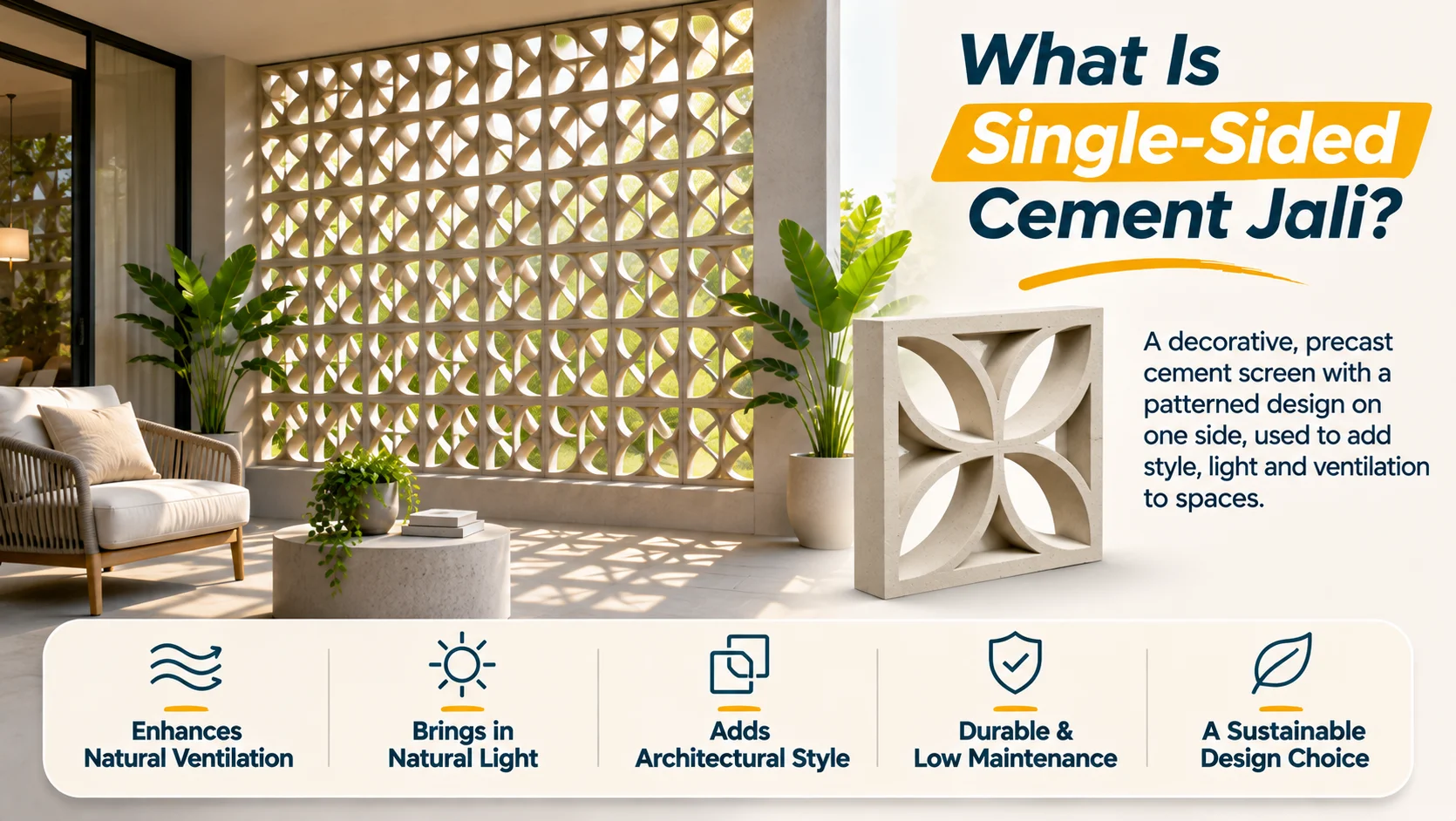
Single-Sided Cement Jali is a decorative cement-based product designed primarily to showcase its main face. Its pattern and visual appeal are intended to be appreciated from one principal viewing direction.
This makes it a practical option for decorative applications where one surface receives most of the attention. For example, a feature wall or a selected section of wall cladding can benefit from a patterned finish that creates visual interest without requiring additional decorative elements.
Where Can You Use Single-Sided Cement Jali?
Single-sided designs can be considered for several applications, depending on the product's specifications and installation requirements.
- Feature walls: Add texture and decorative detail to selected walls in living rooms or other interior spaces.
- Decorative wall cladding: Create an attractive surface in residential or commercial interiors.
- Accent areas: Highlight a specific section of a wall without covering the entire space.
- Architectural details: Introduce patterned surfaces into carefully planned design schemes.
The best application depends on the product's construction, finish, and fixing method. Before selecting a design, check which side is intended to remain visible and whether the product is suitable for the proposed location.
What Is Double-Sided Cement Jali?
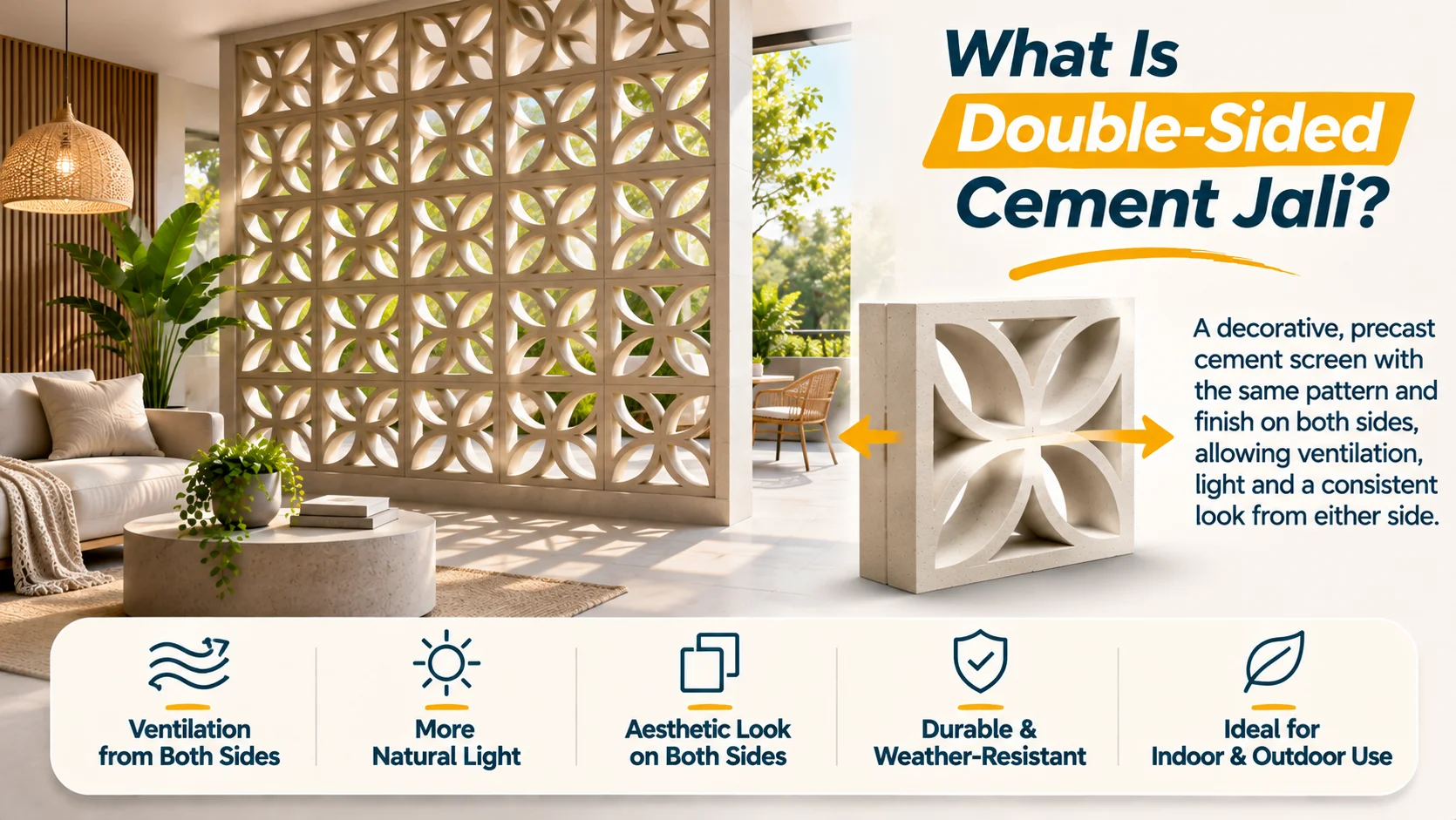
Double-Sided Cement Jali is intended to offer an attractive appearance from both faces. This makes it worth considering for installations where people can see the product from different directions.
Unlike a decorative element viewed mainly from the front, a double-sided design can contribute to the appearance of two adjoining spaces. It can be particularly useful when planning decorative partitions or architectural screens, provided the selected product is suitable for that purpose.
Where Can You Use Double-Sided Cement Jali?
Double-sided designs may suit installations where both faces are visible.
- Decorative partitions: Separate two areas while maintaining a consistent decorative appearance.
- Interior dividers: Add patterned detailing between selected living or dining spaces.
- Visible architectural screens: Create a decorative element that can be appreciated from either side.
- Open-plan spaces: Introduce a visual division without relying entirely on a solid wall.
The term double-sided describes the intended appearance, not necessarily the product's structural capacity. If you plan to use cement jali as a freestanding partition, confirm its dimensions, weight, fixing requirements, and suitability for the proposed installation.
Single-Sided vs Double-Sided Cement Jali: Key Differences
Although both options can add decorative value, their intended applications can differ. The most important consideration is how the finished product will appear within your space.
| Comparison Factor | Single-Sided Cement Jali | Double-Sided Cement Jali |
|---|---|---|
| Intended appearance | Primarily designed to showcase one main face | Intended to look attractive from both faces |
| Best suited for | Applications where one side is the main focus | Applications where both sides are visible |
| Decorative use | Feature walls and selected wall-cladding areas | Visible partitions and decorative screens, subject to product suitability |
| Design planning | Focuses on the main viewing direction | Considers the appearance from both directions |
| Installation planning | Depends on the wall, substrate, and fixing method | Requires consideration of both visible faces and the support system |
| Selection priority | Main-face pattern and finish | Pattern, finish, and appearance on both faces |
These are general selection guidelines. The actual finish, construction, dimensions, and installation suitability can vary by product. Always review the manufacturer's specifications before making a final choice.
1. Design and Appearance
The main difference is how each product is intended to look when installed.
Single-sided cement jali is suitable when the design is primarily viewed from one direction. It can help create a decorative focal point without making the entire wall the centre of attention.
Double-sided cement jali is worth considering when both faces contribute to the visual appearance of a space. For example, a decorative divider between two areas may need to look finished from either side.
2. Application and Placement
Placement plays an important role in choosing between the two options.
A single-sided design may be appropriate for a wall where one face remains visible and the other is installed against a supporting surface. A double-sided design may be more suitable when both faces remain exposed.
However, visibility alone is not enough to determine suitability. The product must also be designed for the intended installation, particularly when used as a screen or partition.
3. Installation Requirements
The installation method depends on the product's design and the surface where it will be fitted.
Before installation, consider the following:
- Check the product dimensions and weight.
- Confirm the recommended fixing method.
- Make sure the supporting wall or structure is suitable.
- Review alignment, joint spacing, and finishing requirements.
- Seek professional advice for freestanding or load-bearing applications.
Do not assume that a double-sided product can automatically support itself as a partition. The structure and fixing system must be appropriate for the intended use.
What Are the Benefits of Cement Jali Designs?
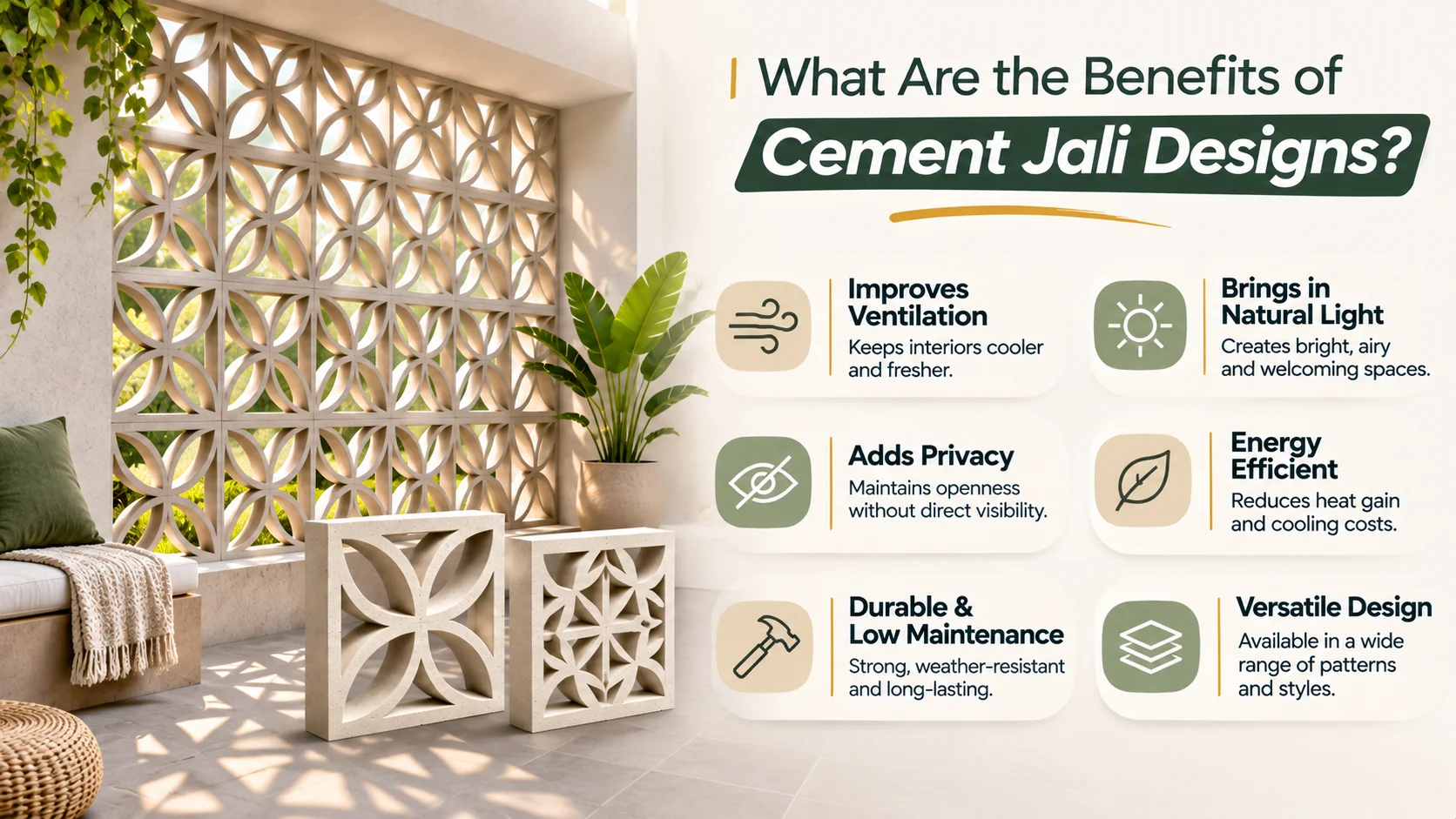
Cement jali adds decorative patterns and texture to walls. It offers design flexibility for different architectural styles and applications.
1. Adds Decorative Character: Cement jali enhances walls with attractive patterns that complement traditional and modern interiors.
2. Offers Design Variety: Available patterns, including geometric and floral designs, suit different design preferences.
3. Supports Creative Wall Design: Cement jali creates attractive feature walls, decorative entrances, and architectural accents.
4. Works Across Different Project Types: Depending on the product specifications, cement jali can be used in residential and commercial spaces.
Explore Cement Jali at Ambika Creative Collection
Choosing the right cement jali design is easier when you can compare different patterns and styles. Ambika Creative Collection offers dedicated collections of single-sided and double-sided cement jali to help customers explore decorative options for their projects.
Whether you are planning a feature wall, decorative wall cladding, or a patterned partition, consider the intended application and the appearance you want to achieve.
Explore the available collections:
- Single-Sided Cement Jali: Browse designs for projects where one face is the primary visual focus.
- Double-Sided Cement Jali: Explore designs intended for applications where both faces may remain visible.
Before making your selection, compare the available patterns, dimensions, and product specifications. For installation-specific requirements, contact the Ambika Creative Collection team to help identify suitable options for your project.
Explore the collections and find a cement jali design that complements your architectural style.
Conclusion
Both single-sided and double-sided cement jali can add decorative character to architectural spaces. The main difference is their intended appearance and how they fit into a particular installation.
Single-sided designs may be appropriate when one face is the main visual focus, while double-sided designs can be useful when both faces need to look attractive. However, the product's construction and installation requirements should always guide the final decision.
Explore the cement jali collections from Ambika Creative Collection to compare available patterns, sizes, and finishes. You can browse the single-sided cement jali collection and the double-sided cement jali collection to find options that suit your project.
Frequently Asked Questions
1. What Is the Difference Between Single-Sided and Double-Sided Cement Jali?
Single-sided cement jali focuses on one main face, while double-sided cement jali is designed to look attractive from both sides.
2. Which Cement Jali Is Best for Home Interiors?
Single-sided cement jali may suit decorative walls, while double-sided designs are worth considering for visible partitions.
3. Can Cement Jali Be Used on Exterior Walls?
Yes, some cement jali products are suitable for exterior walls. Check the manufacturer's specifications for weather resistance and installation requirements.
4. Is Double-Sided Cement Jali Suitable for Partitions?
Yes, it can be suitable for decorative partitions if the product and supporting structure meet the installation requirements.
5. How Do You Choose the Right Cement Jali Design?
Consider the application, pattern, dimensions, visible sides, and installation requirements before selecting a design.